 Constitution Hall State Historic Site
Constitution Hall State Historic Site
Constitution Hall State Historic Site

Melissa B.
Jun 26, 2016
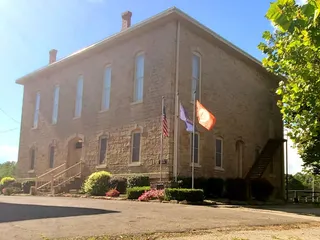
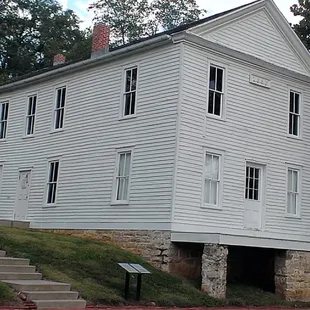
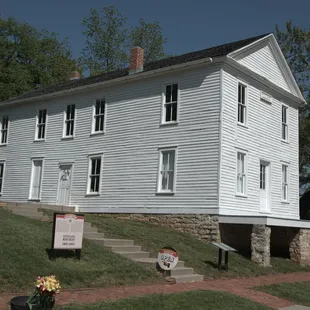
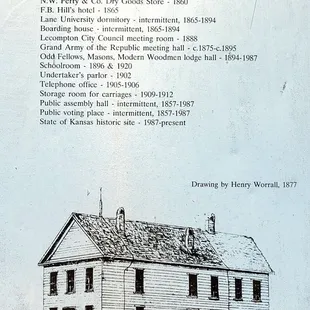
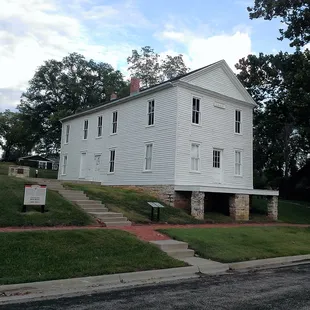
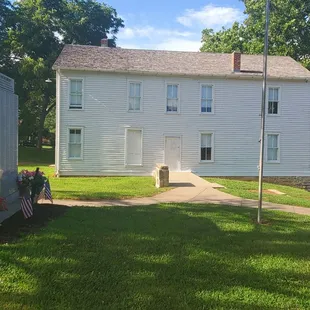
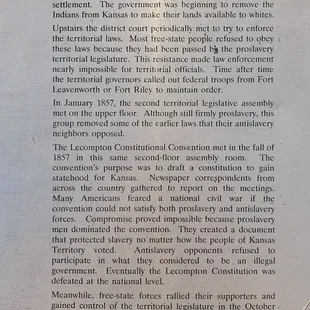
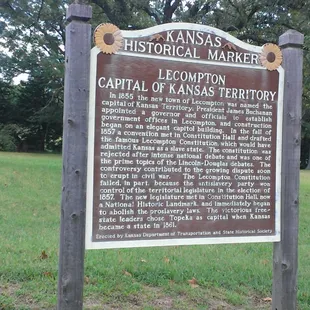
Sept 2015, while visiting some historical sites in Missouri, we found Lecompton on the map and decided to check out the Old Capital area of Lecompton. The birthplace of the Civil War since it was drafted in the building there called Constitutional Hall.History:Lecompton is a city in Douglas County, Kansas, United States. As of the 2010 census, the city population was 625. Lecompton played a major historical role in pre-Civil War America as the Territorial capital of Kansas from 1855 to 1861. This time period was known as Bleeding Kansas.Lecompton was founded in 1854 and planted on a bluff on the south bank of the Kansas River. It was originally called "Bald Eagle", but the name was changed to Lecompton in honor of Samuel Lecompte, the chief justice of the territorial supreme court.[8] In the spring of 1855, the town became the capital of the Kansas Territory. President James Buchanan appointed a governor and officials to establish government offices in Lecompton, and construction began on an elegant capitol building.The first post office in Lecompton was established in September, 1855In the fall of 1857 a convention met in Constitution Hall and drafted the famous Lecompton Constitution, which would have admitted Kansas as a slave state. The constitution was rejected after intense national debate and was one of the prime topics of the Lincoln-Douglas debates. The controversy contributed to the growing dispute soon to erupt in civil war. The Lecompton Constitution failed, in part, because the antislavery party won control of the territorial legislature in the election of 1857. The new legislature met at Constitution Hall and immediately began to abolish the pro-slavery laws.The free-staters briefly attempted to move the territorial capital to Minneola, Franklin County, Kansas through a vote, although the resulting bill was later vetoed by Kansas territorial governor James W. Denver, and ruled void by Jeremiah S. Black, Attorney General of the United States. As such, Lecompton remained the de jure territorial capital until the victorious free-state leaders officially chose Topeka as capital when Kansas became a state on January 29, 1861. The American Civil War began on April 12, 1861.
Read More