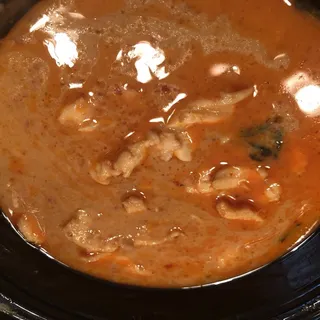
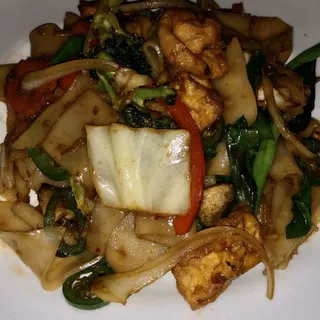
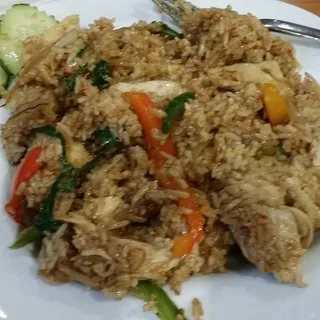
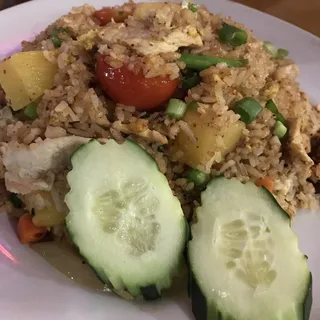
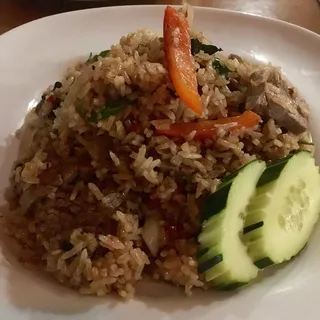
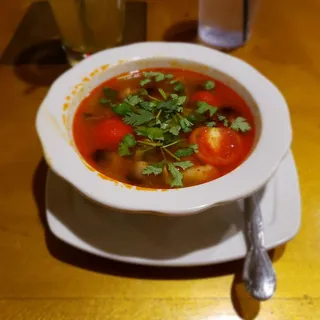
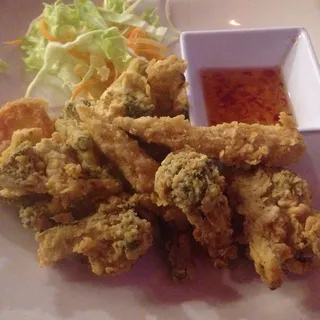
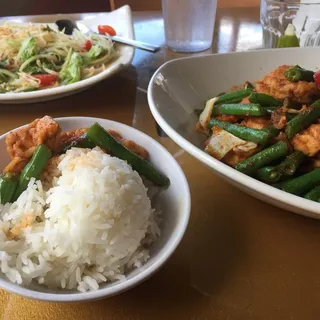
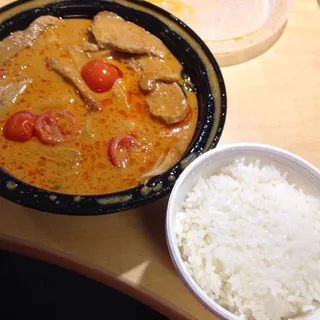
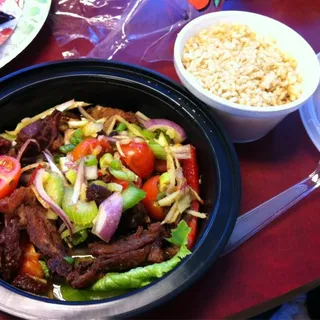
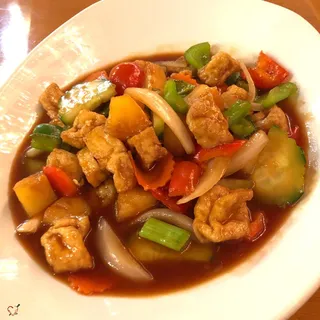
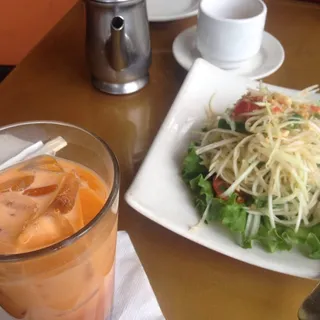
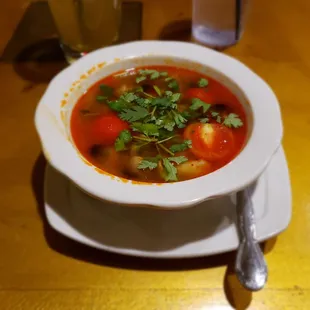
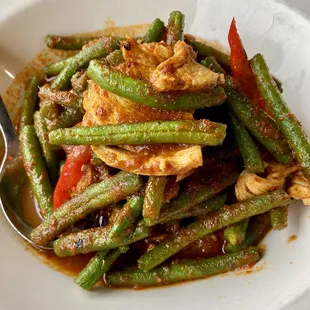
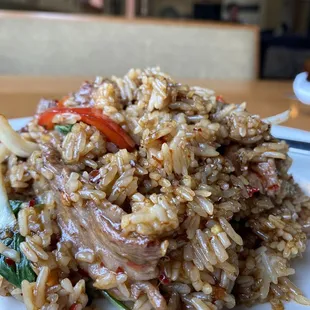
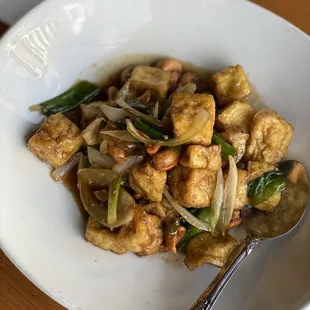
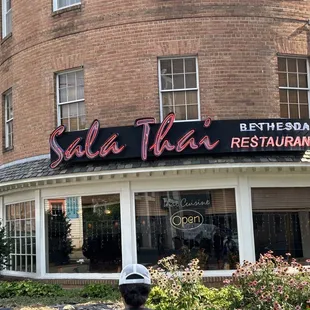
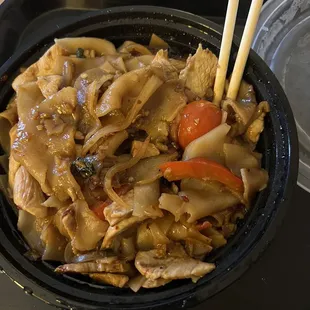
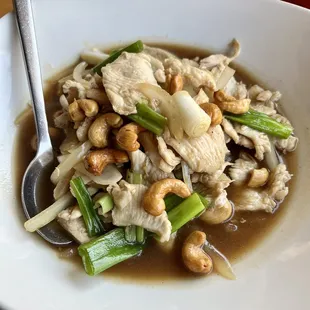
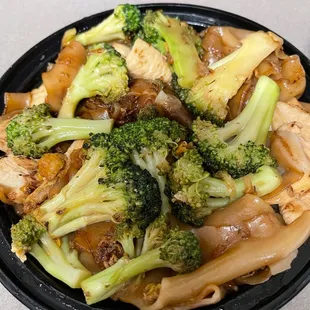
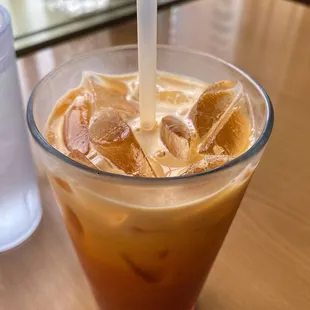
My wife and I ate lunch at Sala Thai with friends. We would go again. One friend is vegan. That is fine. It means, however, we have to study menus to determine what would work for everyone in the party. She then orders her own dish.My wife and I shared the crab fried rice and the pumpkin and tofu. The crab fried rice had sufficient crab. Some places, they have only a hint. The pumpkin and tofu came with penang curry, the sweeter orange stuff. Pumpkin is not the best word; it is kabocha squash, not what in America is served in the autumn with spice. We had enough for leftovers. We were given a bite of the dessert, the fried banana with ice cream, with the fruit in an eggroll casing, essentially a sundae. I also had Thai ice tea. The flavors are as expected. My sense, from a visit to Bangkok where my brother was posted two decades ago, is that the American versions of dishes are all sweeter, verging on cloying. That is not different from other cuisines. Chinese American and Italian American, for example, are distinct from their sources, interpretations based on available ingredients and the majority palate, which then became established and set expectations; you would be surprised by the "authentic," and with Thai in particular the spiciness would not be tolerated.The service was brisk. They presented the bill with an unusual feature that should be a common one. They had added the gratuity, which they noted; that is fine. But they also had done the math: they showed the per person cost, if divided evenly.Something interesting about utensils. In the States, Thai restaurants provide chopsticks. The are catering to their clientele, who assume that Asian eateries rely on chopsticks. But if you research it, that is not the case. The Thai will use chopsticks, in particular if consuming Chinese food or due to the influence of Chinese immigrants, and if the remainder of the meal is Thai for the Chinese noodles if that is served, or upon request. But chopsticks are not normal. So that is an interesting example of cultural passing or masquerade. "Pad thai," which is associated with the nation, is an invention. That does not mean it is not truly Thai (although tartans for clans were a marketing gimmick, they are Scottish; they're merely modern). Pad thai was created within the twentieth century as a project in consolidating identity. Some claim it came from Chinese influence. Or, as with origin stories, it might be both, ironically an effort to strengthen ethnic unity (Thai) by borrowing from an immigrant community (Chinese).
Read More